
The reason a code like Ralbel28.2.5 feels scary is that searching it returns nothing but that absence is the answer, not a dead end. An undocumented code means the fix lives inside the application: in the trigger you can reproduce and the log it writes, not on a forum. Reproduce, read the log, match the fix to the cause, and reinstall only when the log gives you nothing. Same method works on any opaque error code you’ll ever meet.
Note: "Ralbel28.2.5" is used here as a stand-in for the kind of opaque, application-specific error code that isn't documented anywhere public. The point isn't this exact string it's the method you'd use against any error code that returns zero useful search results. Swap in whatever code your software actually threw.
Read the Application’s Own Log
Almost every desktop application writes a log file, and it usually says far more than the on-screen error does. The error code is the headline; the log is the story. This is where a fictional code like Ralbel28.2.5 would typically appear next to a real, readable line such as failed to parse config: unexpected token at line 14 which is the thing you actually fix.
Common locations on Windows:
C:\Users\<you>\AppData\Local\<AppName>\logsC:\Users\<you>\AppData\Roaming\<AppName>C:\ProgramData\<AppName>
Open the newest log, jump to the bottom, and read upward until you hit the first line marked ERROR or FATAL with a timestamp matching your crash. Example: a log reading ERROR config schema version mismatch: expected 28.2, found 27.9 tells you the problem instantly an old settings file is being loaded by a newer build. No reinstall guesswork required.
Why This Code Doesn’t Show Up When You Search It
Plug a Windows stop code like 0x0000007B into a search engine and you get thousands of hits, because it’s a system-level fault thousands of people share. Plug in something like Ralbel28.2.5 and you get nothing or worse, scraped junk pages that restate your question back at you.
That silence is itself a diagnostic clue. A code with no public footprint is almost always internal to one application a label the developers assigned to a specific failure state inside their own code, never meant to be a universal standard. The version-style formatting (28.2.5) usually points to an internal build or module reference, not an OS error class. So the fix isn’t out there waiting to be found; you have to produce it from the application’s own behaviour.
Reproduce it Deliberately Before Changing Anything
The instinct is to immediately reinstall or update. Resist it. If you change the environment before you understand the trigger, and the error disappears, you’ve learned nothing and it’ll come back.
Instead, make it happen again on purpose. Note the exact sequence:
- Example: Say the code only fires when you open a file from a network drive, but never from a local folder. That single observation rules out “the app is broken” and points at a path-resolution or permissions issue. You’ve narrowed the field before touching a single setting.
- Counter-example: If it fires on launch every single time regardless of what you do, that points the other way toward a corrupted config file or a missing dependency the app loads at startup.
Write the trigger down. It’s the most valuable thing you’ll produce in this whole process, and it’s the one detail a support engineer will ask for first.
Match The Fix to What The Log Told You
Only now do the “standard” fixes make sense, because you’re aiming them at a known cause instead of firing blind:
- If the log points to a corrupt or outdated config → don’t reinstall the whole app; just rename the config file (e.g.
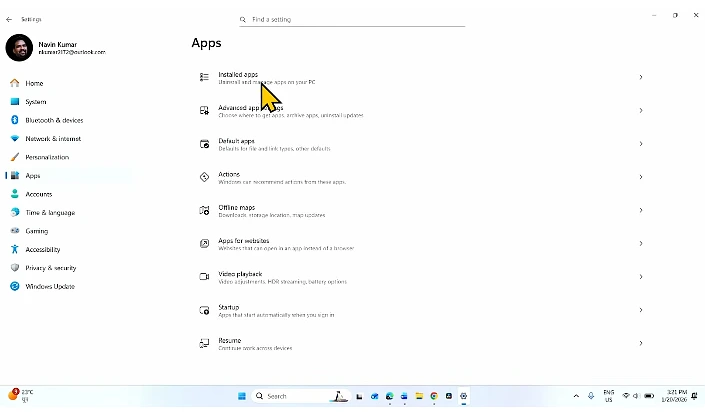
settings.json→settings.json.bak) and relaunch. The app regenerates a clean default, and you’ve kept your installation intact. This is the five-minute fix that a full uninstall-reinstall would have taken an hour to accomplish. - If the log points to a missing dependency (a
.dllnot found, a runtime version error) → install or repair that specific component, not the application. - If the log shows nothing useful or is empty → now a clean reinstall is justified: uninstall, restart to clear cached temp files, then install the latest build from the vendor’s official site.