



Should you require presenter-led videos, but you do not need cameras, studios, or production crews, AI Avatar Generator makers have since become one of the most leverage tools in a contemporary marketing, L&D, or content stack. They produce quick, predictable, brand-safe ads, explainers, onboarding, and multilingual campaigns and the difference between AI-generated and filmed has been reduced considerably as we head to 2026.
How We Chose (Quick Methodology)
We scored each tool on a 100-point rubric weighted toward what actually matters in production:
We scored tools on a 100-point rubric: visual realism & lip-sync (25), voice/language coverage (15), emotion/expression control (10), brand controls & captions (10), speed/ease of use (10), templates & workflows (8), exports & integrations (8), rights/compliance (7), and price-to-value (7). We also looked for clarity on commercial licensing, availability of custom avatars/voices, and signals of responsible data use. Where pricing is mentioned, treat it as indicative always verify inside the product.
We also looked for clarity on commercial licensing, availability of custom avatars and voices, and signals of responsible data use. Where pricing is mentioned, treat it as indicative always verify inside the product before committing.
Deevid AI Avatar Generator


Deevid pairs lifelike avatars with a native AI Ad Video Generator, making it unusually easy to run a “hook → explain → CTA” creative rhythm inside one platform. You can generate on-brand spokespeople, add subtitles and lower-thirds, and export in ad-ready aspect ratios then stitch avatar explainers with motion-first ad cuts for performance testing without ever leaving the tool.
Standout features:
- Lifelike stock avatars plus a guided path to custom avatars.
- Ad-to-avatar pipeline: text, image, or URL in → ad cuts and avatar explainer out (9:16 / 1:1 / 16:9).
- Practical controls for captions, pacing, and branded end cards.
- Mobile apps for review and iteration on the go.
If you want one platform to create thumb-stopping hooks and trustworthy explanations at speed, Deevid is built for that exact loop. It’s the most campaign-ready option for marketers running tight testing cadences.
Synthesia Best Enterprise Realism and Governance
Synthesia has been the realism benchmark for several years running, with a deep avatar catalog, broad language support, and plans that scale from individual creators to enterprise teams. It also communicates clearly about governance and data provenance a non-trivial advantage for stakeholders in regulated environments like finance, healthcare, and pharma.
Pricing snapshot: Multiple tiers from entry-level to enterprise, differentiated by minutes, avatar access, and collaboration roles. Enterprise plans typically run several hundred to over a thousand dollars per month depending on seats and custom avatar needs.
HeyGen Best for Creators and Social Teams
HeyGen is approachable, budget-friendly, and optimized for short-form cadence on TikTok, Meta, and YouTube Shorts. The free plan gives you a low-risk on-ramp, and paid tiers unlock higher render limits, collaboration, additional avatars and voices, and features like digital twin cloning from a single photo or video. Its multilingual voice cloning which preserves your tone across 175+ languages is genuinely impressive, and the Canva integration means brand teams can work inside tools they already know.
Free plan available; paid tiers start affordable for individuals and scale for teams.
Best for: SMBs, solo marketers, and social teams who need many short videos and rapid iteration with a gentle learning curve.
Colossyan Best for Training and Slide-to-Video
Why it stands out: Colossyan is built with workplace learning in mind. You can import PPT or PDF decks, generate scripts from documents, publish multi-language variants, and keep content consistent as policies change. That’s a huge time saver for enablement, support, and HR teams who would otherwise rebuild training assets from scratch every time a regulation or product detail shifts.
Pricing snapshot: Tiered plans aligned with minutes, avatar access, and collaboration needs. Evaluate based on your expected monthly video volume pricing becomes favorable quickly at scale.
Best for: L&D, customer support, and enablement teams converting manuals and presentations into repeatable training that localizes well across markets.
D-ID Best for Talking-Photo Clips and Rapid Translation

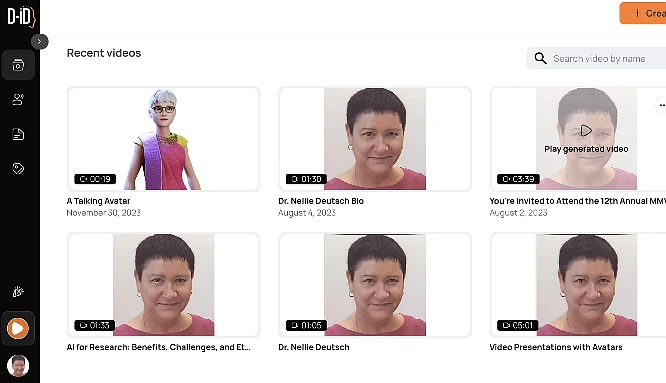
Why it stands out: D-ID excels at two specific jobs: animating a still photo into a convincing talking head, and translating existing videos at scale with voice matching and accurate lip-sync. It’s a fast path for announcements, FAQs, and lightweight explainers you need across multiple markets without re-editing everything from scratch. The Studio interface also lets you build conversational digital agents that can respond from a personalized knowledge base.
Pricing snapshot: Studio and API plans exist; credits and minutes vary by tier. A 14-day trial is usually available for new users.
Teams that need quick multilingual spins of existing assets, talking-head explainers from stills, or embeddable conversational agents.
Leadde Best For A Pure Talking-Head Job
Some teams do not need an ad engine, a training suite or a translation pipeline. They just need one clean talking-head video, made fast, without hiring the other five features they will never touch. That is the gap Leadde fills. You give it a script and a presenter, and it hands back a presenter-led clip you can drop straight into a landing page, an email, or a social post. Where it earns its place is focus. Instead of learning a full studio, you run a straightforward talking head video workflow from script to finished clip, which suits a small team or a solo marketer who wants the one job done and off their plate. It is the pick when the talking head is the deliverable, not a piece of a bigger campaign machine. Best for: small teams, founders and solo marketers who want a single talking-head video made quickly, without paying for a full production suite around it.
Side-by-Side Buying Note
- Realism and governance: Synthesia leads for enterprise polish and compliance signals. Colossyan focuses on structured learning workflows and content consistency over raw realism.
- Speed to ad-ready output: Deevid’s avatar + ad-generator combination minimizes vendor hopping for the classic hook → explain → CTA build. HeyGen is the easiest starter for steady social cadence.
- Localization: D-ID’s translation tools are purpose-built for this job. Synthesia and Colossyan also provide broad language coverage for global teams, but with less translation-specific tooling.
- Pricing sanity check: Free or low-cost trials exist across most creator-focused tools. Minutes, watermarking rules, and custom-avatar fees vary significantly confirm before you commit, and watch for credit-based pricing that can escalate faster than flat monthly plans.
Match the Tool to Your Use Case
Performance ads (TikTok, Meta, YouTube Shorts): Deevid or HeyGen. Choose Deevid when you want motion-first hooks paired with an avatar explainer inside one workflow. Choose HeyGen for a simple, low-friction editor with quick social output.
Training, onboarding, policy updates: Colossyan or Synthesia. Both deliver consistent, multilingual content. Synthesia adds a realism edge for high-stakes audiences like executive communications or customer-facing training.
FAQ and localization bursts: D-ID for photo-to-talking-head and bulk translations effortless with lip-sync and voice matching.
Example: Automating Avatar Video Generation via API

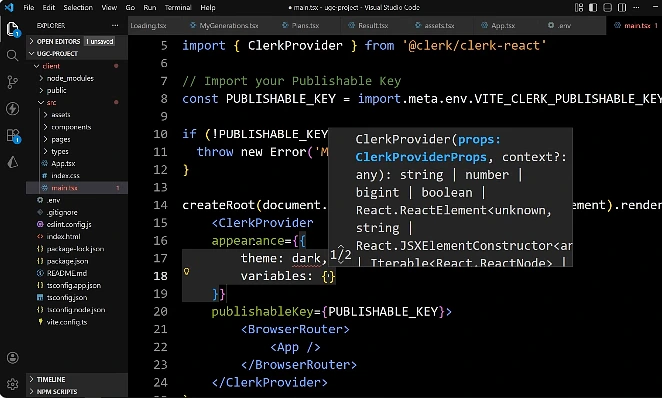
The APIs of most of these platforms are exposed so that you can drive video generation on a programmatic basis, which is useful in personalized outreach on a scale, automatic training updates, or dynamic ad generation. The following is a practical example of Node.js that utilizes HeyGen-style video generation endpoint (the same pattern can be applied to Synthesia, D-ID, and Colossyan):
// generate-avatar-video.js
// Node 18+ (uses built-in fetch)

const API_BASE = "https://api.heygen.com/v2";
const API_KEY = process.env.HEYGEN_API_KEY;

async function generateAvatarVideo({ script, avatarId, voiceId, aspectRatio = "16:9" }) {
  const payload = {
    video_inputs: [
      {
        character: {
          type: "avatar",
          avatar_id: avatarId,
          avatar_style: "normal",
        },
        voice: {
          type: "text",
          input_text: script,
          voice_id: voiceId,
        },
        background: {
          type: "color",
          value: "#0A0A0A", // on-brand dark background
        },
      },
    ],
    dimension:
      aspectRatio === "9:16"
        ? { width: 720, height: 1280 }
        : aspectRatio === "1:1"
        ? { width: 1080, height: 1080 }
        : { width: 1920, height: 1080 },
    caption: true,
  };

  const response = await fetch(`${API_BASE}/video/generate`, {
    method: "POST",
    headers: {
      "X-Api-Key": API_KEY,
      "Content-Type": "application/json",
    },
    body: JSON.stringify(payload),
  });

  if (!response.ok) {
    throw new Error(`Video generation failed: ${response.status} ${await response.text()}`);
  }

  const { data } = await response.json();
  return data.video_id;
}

async function pollVideoStatus(videoId, { maxAttempts = 60, intervalMs = 5000 } = {}) {
  for (let i = 0; i < maxAttempts; i++) {
    const res = await fetch(`${API_BASE}/video_status.get?video_id=${videoId}`, {
      headers: { "X-Api-Key": API_KEY },
    });
    const { data } = await res.json();

    if (data.status === "completed") return data.video_url;
    if (data.status === "failed") throw new Error(`Render failed: ${data.error}`);

    await new Promise((r) => setTimeout(r, intervalMs));
  }
  throw new Error("Timed out waiting for video render");
}

// Generate a 12-variant ad test grid
async function runVariantGrid() {
  const hooks = [
    "Struggling to ship ads fast enough? Here's the fix.",
    "Your next winning ad is 3 minutes away.",
    "93% of testers saved hours with this workflow.",
  ];
  const tones = ["friendly", "expert"];
  const ctas = ["See it in action", "Start free today"];

  const variants = [];
  for (const hook of hooks) {
    for (const tone of tones) {
      for (const cta of ctas) {
        const script = `${hook} Our platform turns a script into an on-brand presenter in minutes — no camera, no crew. ${cta}.`;
        variants.push({ script, tone, cta });
      }
    }
  }

  const results = [];
  for (const v of variants) {
    const voiceId = v.tone === "friendly" ? "voice_friendly_01" : "voice_expert_01";
    const videoId = await generateAvatarVideo({
      script: v.script,
      avatarId: "avatar_brand_presenter_01",
      voiceId,
      aspectRatio: "9:16",
    });
    const url = await pollVideoStatus(videoId);
    results.push({ ...v, url });
    console.log(`✓ Rendered variant: ${v.tone} / ${v.cta}`);
  }

  return results;
}

runVariantGrid()
  .then((r) => console.log(`Generated ${r.length} ad variants`))
  .catch(console.error);
Tips for Better Results (Tool-Agnostic)
- Script length: Aim for 90 to 150 words. One idea per video. Front-load the hook and keep on-screen captions to seven words or fewer per line for mobile readability.
- Structure: Pain → Promise → Proof → CTA. This classic frame still outperforms clever alternatives in the majority of A/B tests.
- Design for sound-off: Always add subtitles. Check safe areas and color contrast, especially for vertical formats.
- Variant discipline: Start with a 12-variant grid (3 hooks × 2 tones × 2 CTAs), cap the learning budget, and promote winners weekly. Without this discipline, you’ll burn spend testing ideas that never had a real chance.
- Localization hygiene: Keep visuals constant across markets. Swap voiceover, subtitles, currency, units, and legal lines via a simple “locale sheet” so QA stays manageable.
- Governance: Lock brand presets, set an approval flow, and keep a changelog of localized lines and claims. This matters more than teams realize until the first compliance review.